Addendum to 'Indivisible Duality' | A lesson from Buddhism
ADDENDUM TO INDIVISIBLE DUALITY
Shveta Dhamankar
2/20/20262 min read
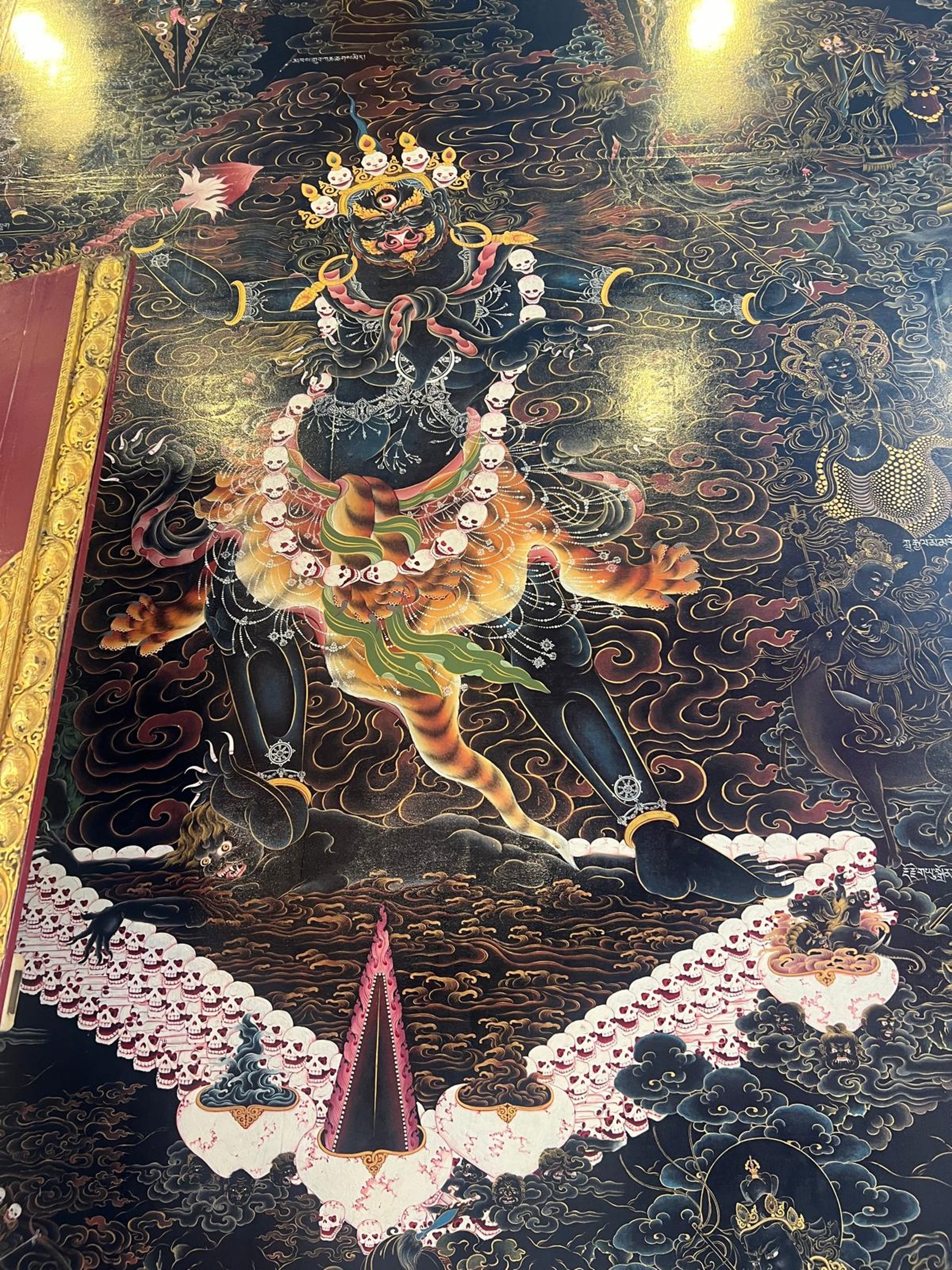
I recently travelled with my family to the Namdroling Monastery, a major center of Tibetan Buddhism in India. Now, when I think of buddhism, I think of the peaceful Buddha meditating under the Bodhi tree. Fundamentally, it is an image of peace and calm.
I had written a piece about indivisible duality some time ago, about how we need learn how to dance where dualities meet, at the edge of order and chaos, light and shadow, known and unknown, whatever it may be. I was very pleased (with myself) to see this sentiment so vivaciously captured in Namdroling Monastery. We all know about the Buddha, of course, but in ‘supposed’ strong contrast I saw several pictures of the ‘Mahakala’ throughout the monastery. This deity with long talons, a garland of skulls and dancing on top trampled figures is no picture of piece. At first glance, it is a picture of wrath. However, the true meaning of the symbolism and the iconography is far more nuanced [1]. ‘Mahakala’ literally translates to ‘The Great Black One’. Here, the black color symbolizes taking in everything, i.e. ultimate reality. The crown of five skulls shows victory over the five vices of anger, pride, ignorance, desire, and jealousy. The flaming hair shows the burning away of ignorance and difficulties. The third eye, similar to the eye of horus, demonstrates awareness. The wrathful expression shows the Mahakala’s commitment to protecting dharma (teaching or way of life), at whatever cost. Similar to Lord Shiva, Mahakala wears a tiger skin that illustrates mastery over primal instincst and raw power. The way I perceive the tiger skin, is that you should tame your demons or our powers, not banish them.
This picture is worth more than a 100,000 words and I am barely scraping the surface. At first I was taken aback by the anger, but now I see it as hope. Peace is a benevolent goal. But we need to be prepared for war if we want peace.
Per the generally accepted definition of religion, I am not a religious person. But, I sincerely wish I to channel my inner Mahakala, find courage within.
References:
[1] Mahakala Deity: Symbolism, Origins and Roles in Tibetan Buddhism
Notes:
There are several overlaps between Buddhist and Hindu gods. The tiger skin worn by Mahakala and Lord Shiva is one example. I wonder if these two are branches of the same tree.
Join My Journey
Get fresh stories and updates every week
Contact
leters@shvetadhamankar.com